[Part 5] Six modern software architecture styles: Edge computing
Fifth instalment in the "Six modern software architecture styles" blog post series. In short: Bring computation and data storage closer to the end user.

![[Part 5] Six modern software architecture styles: Edge computing](https://www.multiplayer.app/blog/content/images/size/w1200/2025/11/Six-modern-software-architecture-styles-3.png)
This blog post series reviews six common architectural styles used in distributed systems and talks about how to choose the best one for your use case.
This blog post focuses on the Edge computing architectural style, however we also recommend checking the other posts in the series:
(1) Monolithic
(2) Microservices
(3) Event-Driven
(4) Serverless
(5) Edge Computing
(6) Peer-to-Peer
Edge Computing Architectural Style
One-liner Recap:
Bring computation and data storage closer to the end user.
Background:
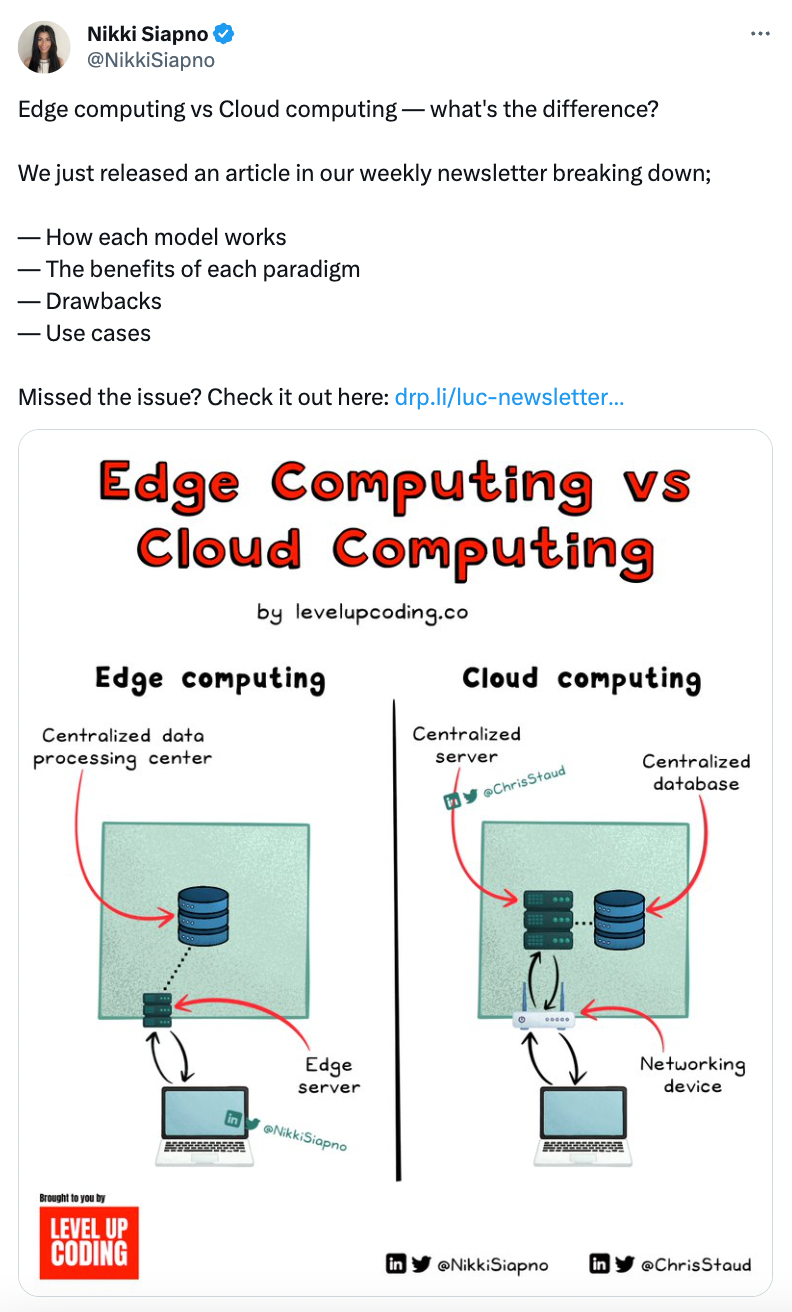
Edge computing is yet another evolution of cloud computing and a “variation” of the Serverless architecture, which responds to applications’ requirements of high-speed, high availability, and near-instantaneous processing of data.
Unlike the traditional cloud model, which relies on centralized data centers, edge computing brings data and computational power closer to the sources of the produced data, hence, closer to the applications and the users that consume it. This significantly reduces bandwidth and response times.
Edge computing can be viewed as a layered approach: the top layer is comprised of cloud data centers (including central and interconnected regional data centers), while the edge layer is composed of the edge data centers, edge devices (e.g. smartphones, tablets, etc.) and edge things (e.g. scanners, sensors, beacons, etc.).
Databases are embedded within the individual elements of the edge layer and the captured data is replicated and synchronized across the entire system (i.e. between the cloud databases, the edge data centers, and the embedded databases on the devices) ensuring it is always consistent and available.
Weaknesses:
Managing data at the edge isn’t always easy, not only because it’s a relatively recent paradigm shift in cloud computing that's still lacking sophisticated orchestration and automation tooling. But also because of the following:
- Limited computational resources: Edge devices often face limitations in processing power, memory, and storage, which impacts the speed and complexity of the data processing tasks.
- Data security and privacy concerns: Edge devices don’t often have the same security measures as centralized data centers or the capability to leverage existing security standards or solutions, making them more vulnerable to breaches. (Although, there’s a counter benefit to not having to move sensitive data away from the relevant edge nodes).
- Inconsistency from cold starts: This is a bane for any serverless system and the price you have to pay for not having to maintain and deploy your own instances. However, in Edge computing architectures, the problem can be worse because the computing workload is spread out across more servers and locations (i.e. there is very low likelihood that the that code will be "warm" on any particular server when a request arrives).
On a smaller scale, although Edge computing architectures are designed to function in situations of intermittent connectivity, it can still cause disruptions to the transmission of data to the central cloud servers or other edge nodes. However, the impact of intermittent connectivity is not nearly as significant as in other architectural styles that rely solely on the cloud for storing and processing data.
The distributed, geographically dispersed nature of edge computing also makes debugging significantly more complex than traditional cloud architectures. When functions execute across multiple continents with varying resource constraints and network conditions, traditional centralized logging provides an incomplete picture.
Full stack session recordings bridge this gap by maintaining unified visibility across all edge locations, allowing developers to trace user sessions from the triggering event through whichever edge nodes processed the request, regardless of geographic distribution.
Strengths:
“Today, I’m convinced that we were wrong when we launched Cloudflare Workers to think of speed as the killer feature of edge computing, and much of the rest of the industry’s focus remains largely misplaced and risks missing a much larger opportunity. I'd propose instead that what developers on any platform need, from least to most important, is actually: Speed < Consistency < Cost < Ease of Use < Compliance.”
- Matthew Prince, Co-founder & CEO of Cloudflare
Edge computing architectures empower use cases that were previously impossible due to the inability of critical systems to operate irrespective of connectivity. Just think that in the case of catastrophic network failure, where the layers of the cloud data center and the edge data center become unavailable, the edge devices with embedded data processing would continue to run in isolation, with 100% availability, and real-time responsiveness until connectivity is restored.
But keeping data near the edge of the network has many critical advantages beyond high availability. And even beyond faster data analysis and cost-effectiveness.
Another key benefit is that sensitive data never has to leave the “edge”: the physical area where it is gathered and is used within the local edge (e.g. within a country’s borders). This is particularly interesting given the increasing trend of countries pursuing regulations that ensure their laws apply to their citizens’ personal data.
Real-world use cases:
The Edge computing architecture style finds diverse applications in real-world scenarios and it’s particularly beneficial for systems requiring real-time responses such as IoT devices, autonomous systems, and immersive technologies like virtual and augmented reality. Think for example, of connected homes, autonomous vehicles, robotic surgery, and advanced real-time gaming.
👀 If this is the first time you’ve heard about Multiplayer, you may want to see full stack session recordings in action. You can do that in our free sandbox: sandbox.multiplayer.app
If you’re ready to trial Multiplayer you can start a free plan at any time 👇