The debugging agent for developers: runs locally and eliminates PR slop
The Multiplayer debugging agent is purpose-built for developers working with coding agents. It captures all the data observability tools miss and manages the whole process from bug identified to bug fixed.

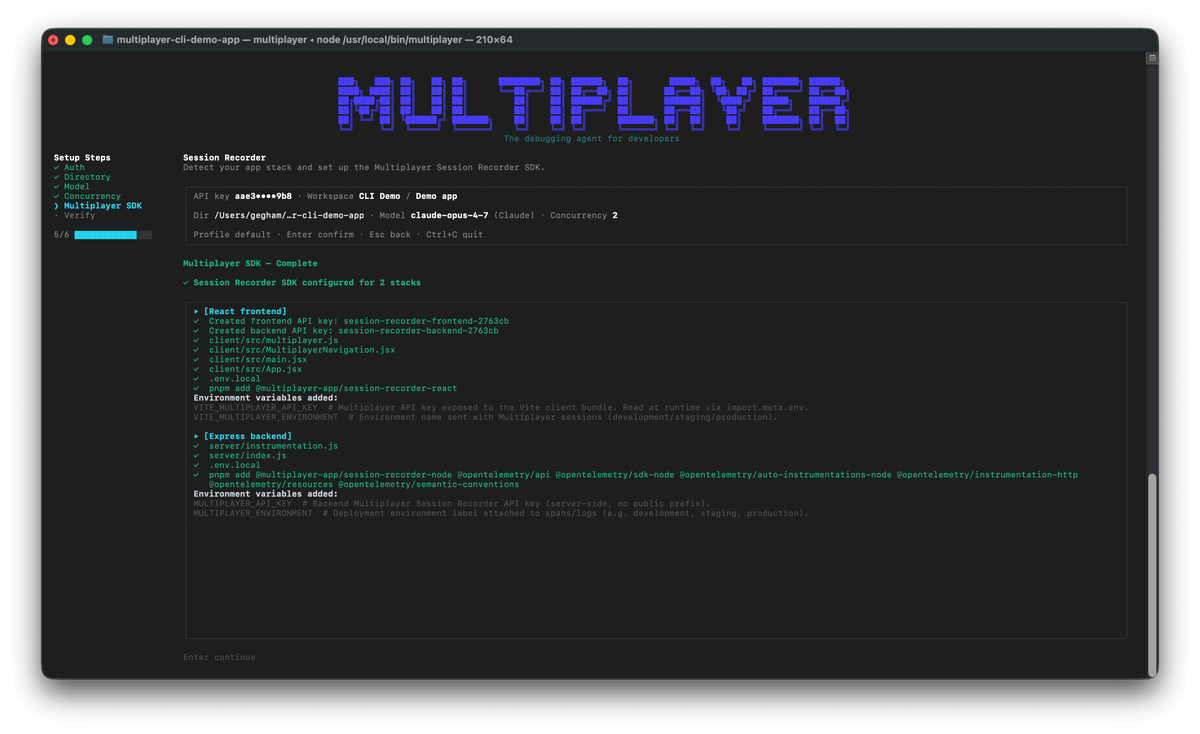
AI coding assistants are great at writing code. They are not great at fixing bugs in production and the reason is simple: they don’t have runtime visibility.
The obvious solution is to connect them to your existing observability stack. Teams are already doing this: hooking Claude Code or Cursor up to a Datadog MCP server, using Sentry Seer to understand their error logs, building integrations that give coding agents access to traces and dashboards. On the surface this looks like runtime visibility. In practice, it produces plausible-looking PRs that fail in production.
The problem is the data itself. Your observability stack was designed for humans monitoring system health. It's sampled (sometimes at 1%, sometimes at 10%) to keep storage costs manageable, which means the specific request that caused the failure may not exist in your telemetry at all. It's aggregated across sessions and time windows, which strips out the exact sequence of events that preceded a failure. It's missing critical content entirely such as request/response payloads and headers from deep within your system. And it lives across multiple tools, each with their own MCP server and integration requirements, that a coding agent has to stitch together without native correlation across service boundaries.
Developers have to spend hours assembling enough context to write a fix or waste tokens having coding agents grep through non relevant data and rewriting bug fixes.
We got tired of grepping through logs, dealing with missing data, and PR slop.
That’s why we built the Multiplayer debugging agent: a companion that runs locally next to your coding agent and manages the whole process from bug identified to bug fixed, using full-stack, unsampled runtime data.
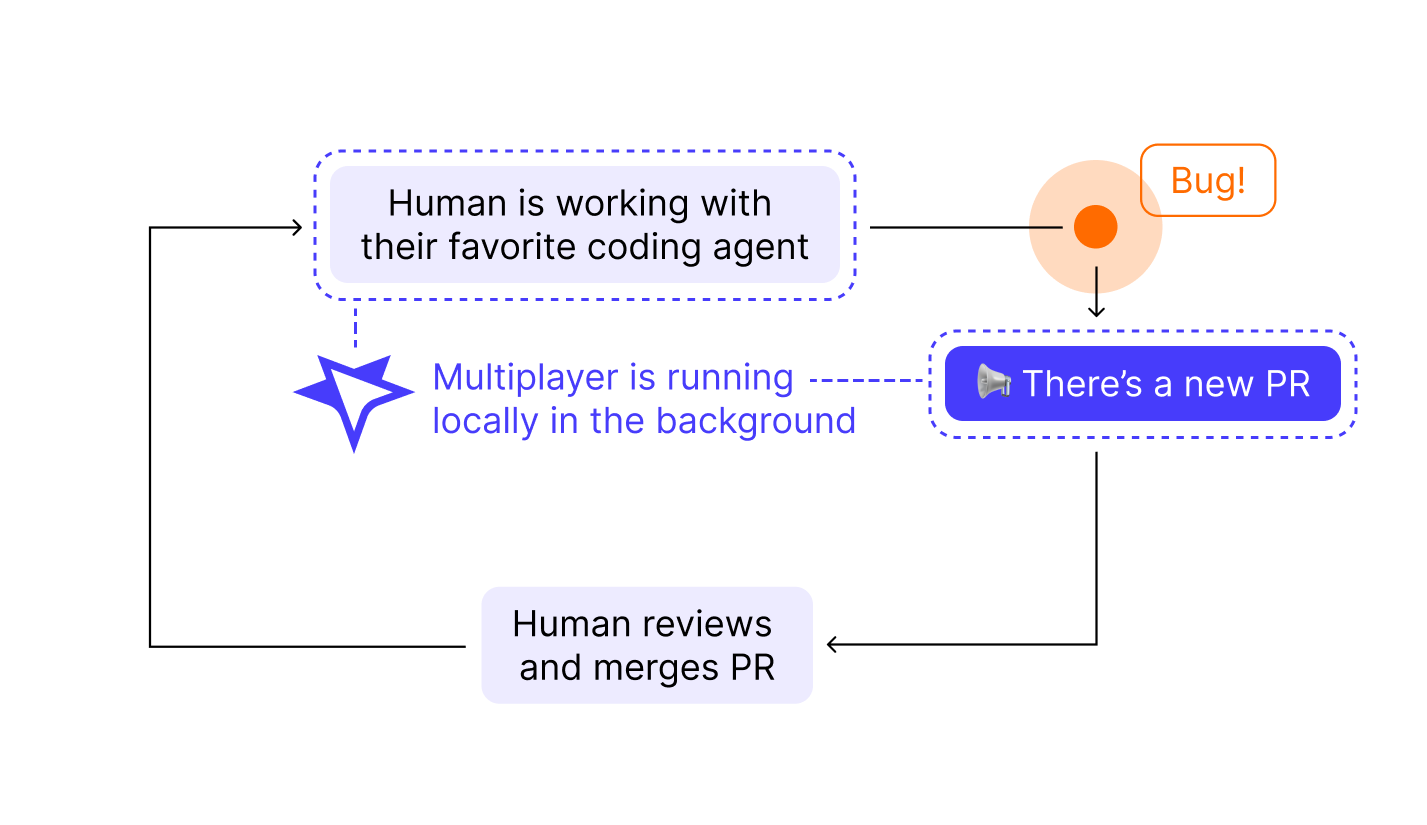
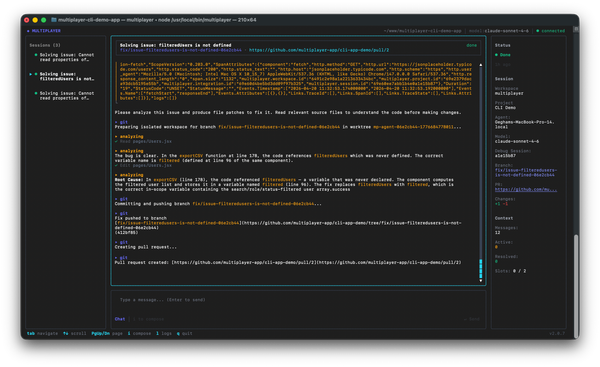
The developer experience is intentionally simple. Multiplayer runs locally in the background while you work. When a bug surfaces, your coding agent gets notified, a new git branch is created, and a PR lands in your review queue. You review it, merge it, and move on. No manual investigation, context-switching, or wasted tokens.
How it works under the hood
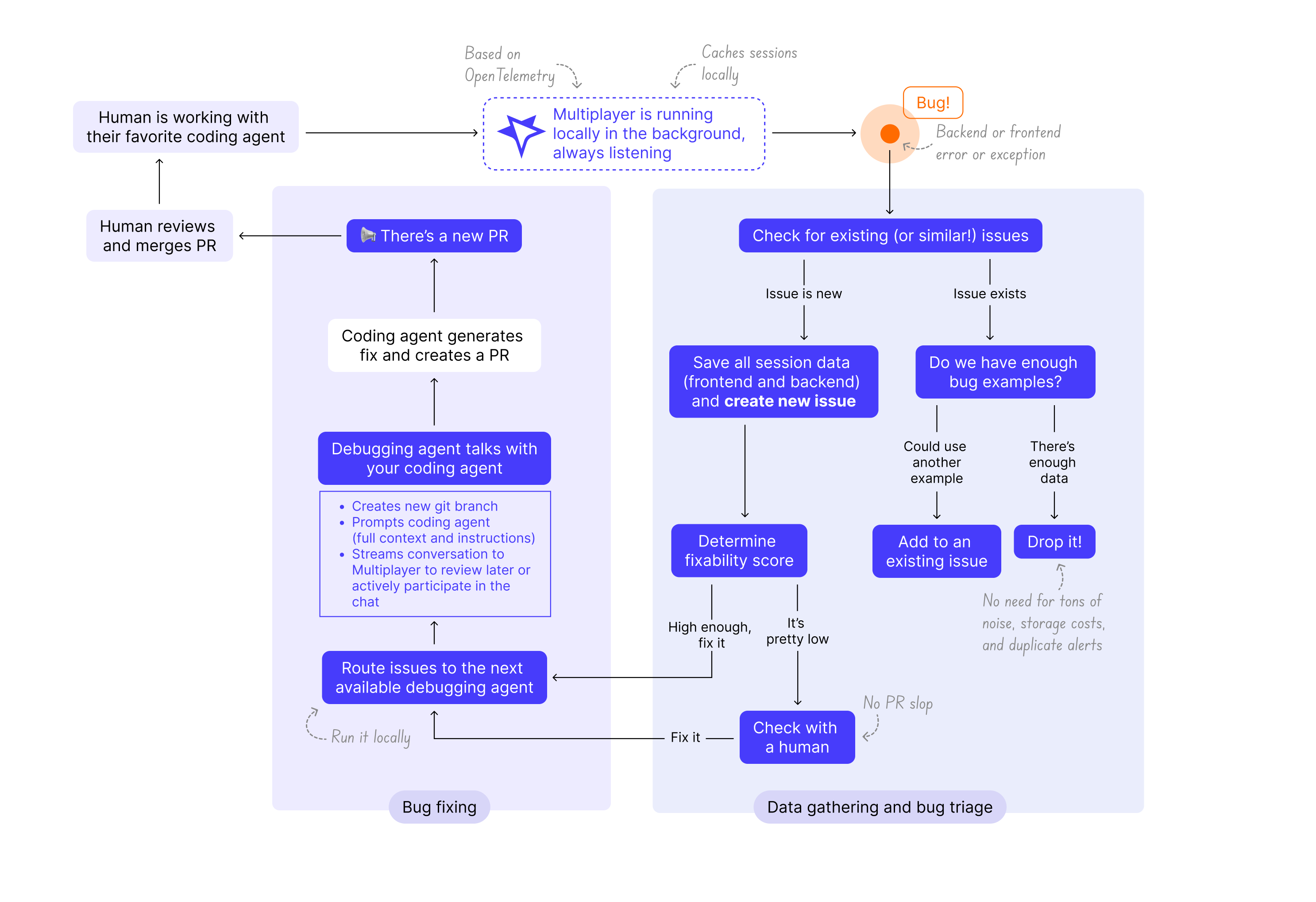
Most observability tools are built around always-on data collection: instrument everything, ship it to a cloud backend, sample aggressively to manage costs, and hope the data you need wasn't in the 90% that got dropped. That model was not designed for coding agents that need complete, pre-correlated runtime context to write accurate fixes.
We built Multiplayer's data layer differently from the start, around three architectural decisions that matter:
Full-stack, session-based data collection
Multiplayer listens continuously but only saves data when something goes wrong. When a backend or frontend error or exception fires, we capture and correlate all the sessions across your stack: user interactions, network requests, console logs, backend traces, request/response content and headers from every component in your system. Everything that happened before, during, and immediately after the failure. Sessions that ran clean get dropped entirely.
This ensures you have full-stack, pre-correlated, unsampled runtime data about an issue, while storage costs are kept low.
Local-first caching
Multiplayer runs right next to your favorite coding agent (Claude Code, Codex, Copilot, etc.) without requiring access to your codebase. Sessions are also cached locally before any data gets sent.
This matters for security: your code never leaves your machine, and you retain complete control over what gets debugged and when.
Intelligent triage and deduplication before the coding agent ever sees the issue
This is where most debugging tools break down when you connect them to a coding agent. A bug that surfaces across a hundred user sessions generates a hundred error events. Without deduplication, your coding agent gets prompted a hundred times, opens near-identical PRs, and your review queue fills up with variations of the same broken fix.
Multiplayer checks every new error against existing issues. If it's new, we save the full session data, score it for fixability, and create an issue that we send to your coding agent to automatically fix.
If it's a known bug, we add the session to the existing issue or drop it entirely if we already have enough examples of that error.
This means we're not burning tokens on issues that have already been identified, and we're not opening PRs for bugs your coding agent has already seen.
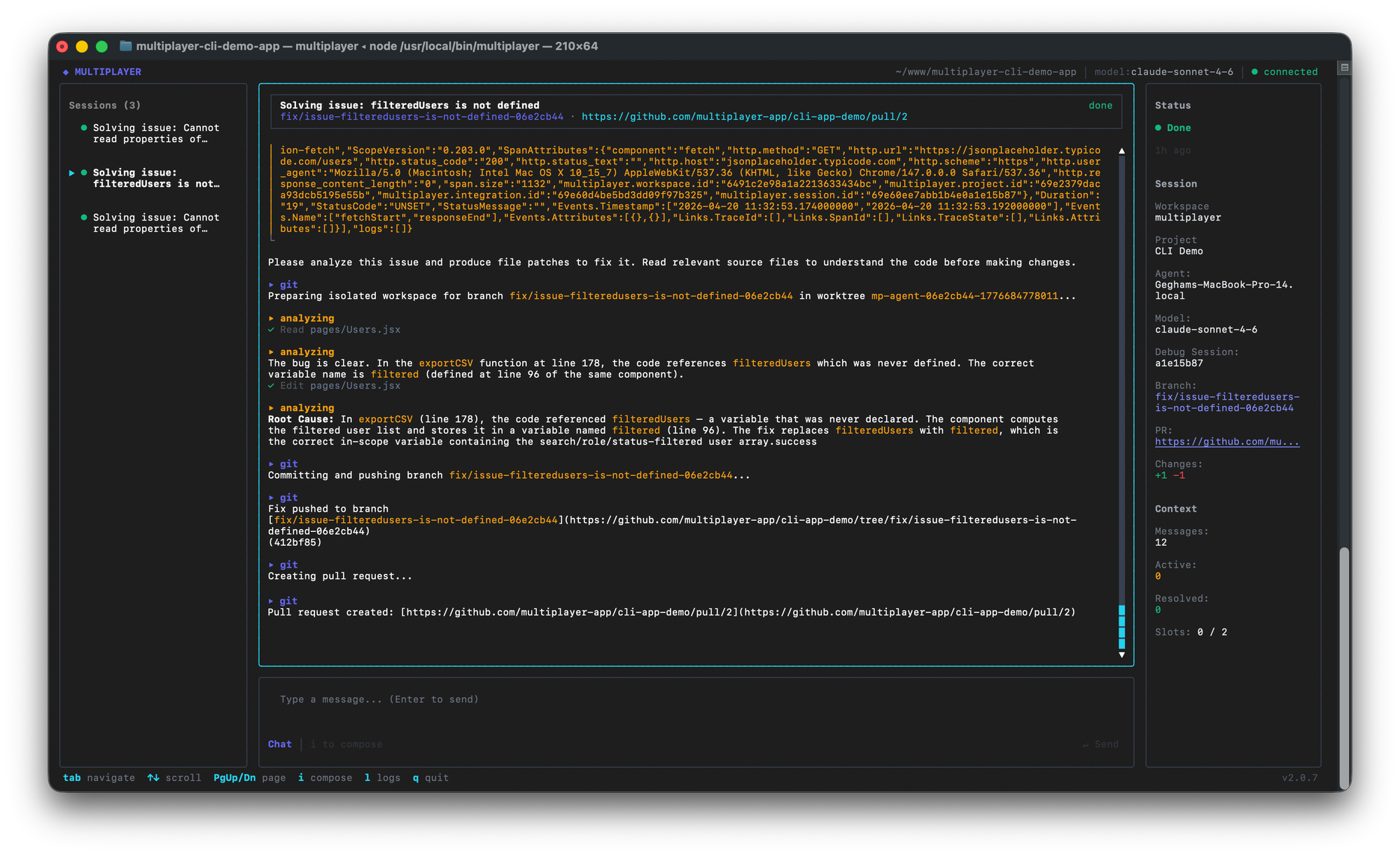
Run it locally, for free👇