Say goodbye to outdated documentation: meet Multiplayer’s system auto-documentation
Multiplayer automates the tedious task of creating and maintaining system documentation, while also facilitating collaboration and shared understanding across distributed teams working on complex, evolving software systems.

Engineering teams are under constant pressure to deliver software faster, without sacrificing quality or maintainability. Yet, how often are precious hours lost to chasing scattered, incomplete, or outdated documentation? Worse yet, how much institutional knowledge is lost when key team members leave and your documentation wasn’t kept up to date?
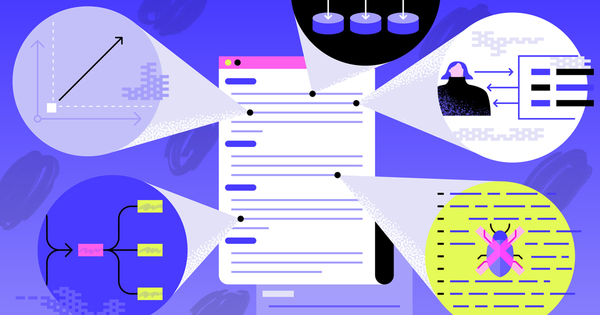
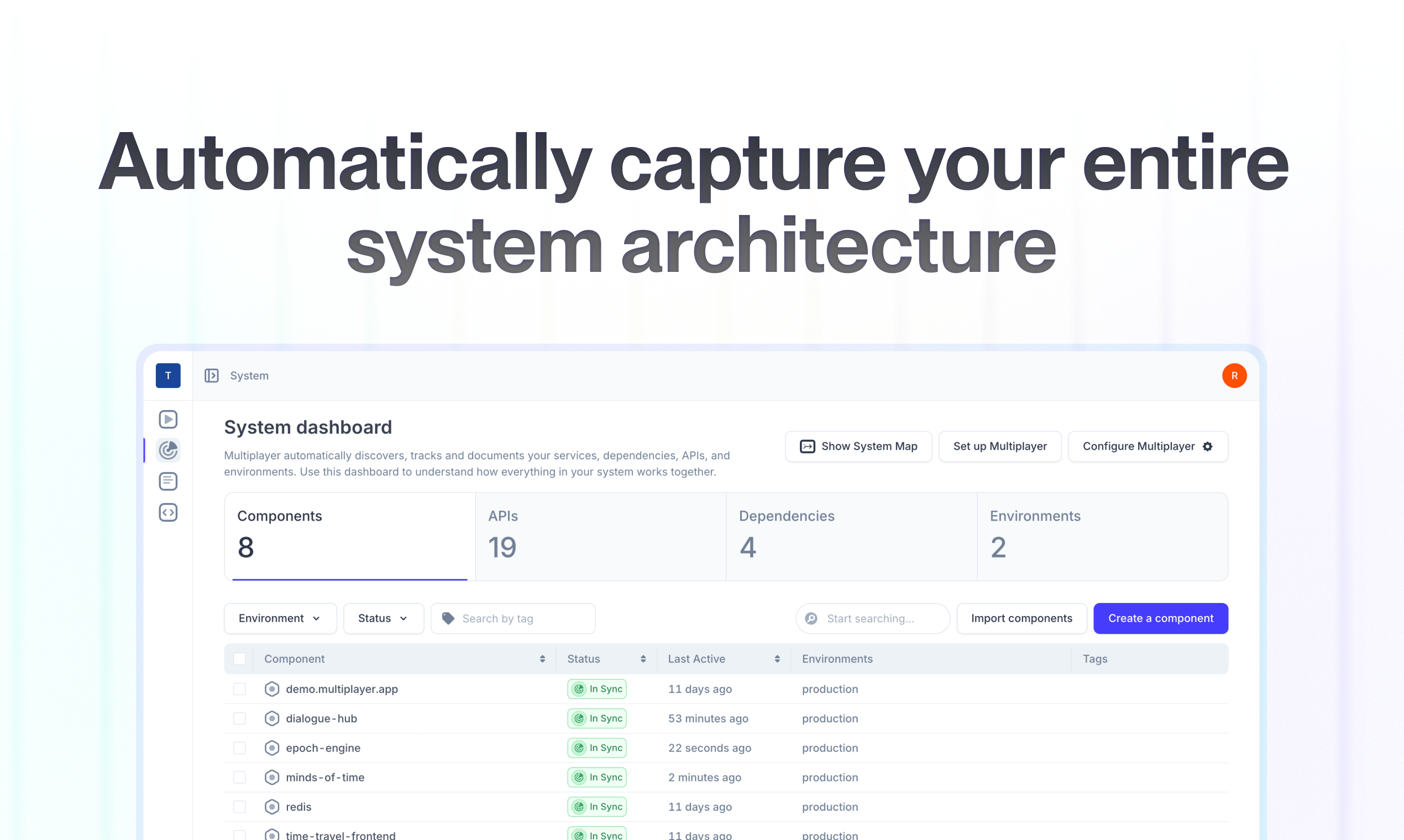
At Multiplayer, we believe documentation should never be a liability. That’s why we created the system dashboard to auto-document your entire system based on your existing telemetry data. It's a dynamic, always up-to-date view of your entire system architecture, including: components, dependencies, APIs, and environments.
Our mission is simple: to equip developers with the tools they need to debug complex, modern software systems, reduce cognitive overhead, and foster seamless collaboration.
The problem with traditional system documentation
Every engineering team has experienced standing around a whiteboard, meticulously mapping out the system architecture. While the exercise feels productive at the moment, it typically leads to these three outcomes:
- Someone writes “Do not erase,” and the diagram lingers on the whiteboard for weeks (or months!), even as it grows increasingly inaccurate with each system update or iteration.
- Key details are inevitably missed. Depending on the level of abstraction, the diagram may fail to include critical components or real relationships, or, worse, depict relationships that don’t actually exist.
- Despite its imperfections, the diagram becomes the go-to tool for onboarding new team members or collaborating across teams, simply because it’s the closest thing to an architecture overview anyone has.
This is just an example, that shows how developers recognize the importance of documentation.
Especially when dealing with large, complex systems composed of numerous interdependent moving parts. This complexity grows exponentially in large systems managed by equally large, distributed teams with varying documentation habits.
Yet, despite the clear need for documentation, it’s often relegated to an afterthought. Startups frequently deprioritize documentation in favor of delivering features, while enterprises often find the sheer volume of their software systems (or legacy systems) too overwhelming to tackle effectively.
The core issue is the enormous time and effort required to manually create and maintain documentation.
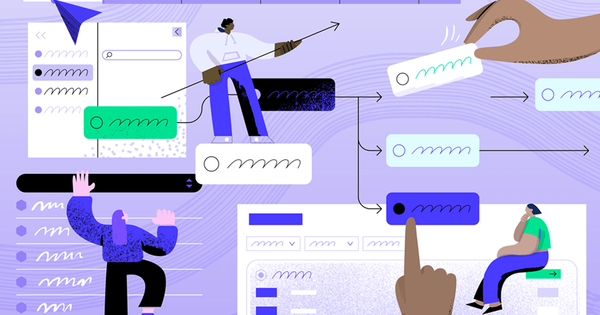
Traditional methods rely on static diagrams and documents that are error-prone, quickly outdated, and prone to fostering knowledge silos. And when diagrams are created, they often involve the tedious and cumbersome process of manually mapping edges to nodes, arranging elements to avoid collisions, and saving the file somewhere it may or may not be editable later.
Ultimately, bad documentation and no documentation lead to the same outcome: wasted time. Developers are left digging through multiple tools and resources to understand how something works or chasing down the original developers, if they’re even still around, to get the answers they need.
Introducing the system dashboard
As your system evolves incrementally and continuously, so should your documentation, without imposing additional manual overhead on your team to track every change.
That’s why we’re introducing a system dashboard as a support to full stack session recordings. It's a comprehensive, real-time, and automated overview of your entire system architecture.
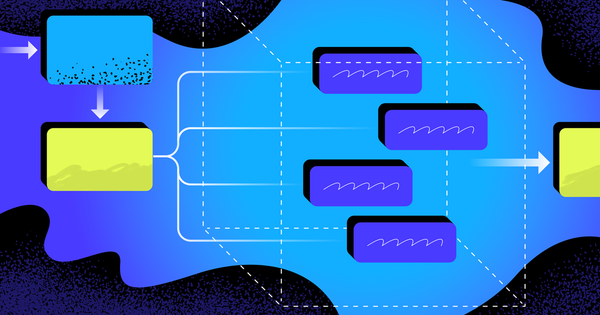
We leverage OpenTelemetry to automatically discover, track, and document components, APIs, dependencies, and more within your system. The system dashboard serves as a central location with real-time information about your running system.
Why auto-documentation is a game changer
If you’re still unconvinced, here’s a list of reasons why auto-documenting your system addresses some of the most pressing challenges faced by modern engineering teams:
1. Eliminating the overhead of manual documentation
Manually creating and maintaining accurate system documentation is a time-consuming task that quickly becomes unmanageable as systems grow and evolve, especially in distributed environments with global teams. Multiplayer automates this process by continuously discovering and documenting components, dependencies, and APIs, ensuring you immediately have access to always-up-to-date information.
2. Accelerating debugging
Debugging distributed systems is a notoriously labour-intensive task, having to constantly switch between tabs and tools to collect the full picture of what happened (and to identify what the possible root cause might be). Full stack session recordings provide you an immediate resource to understand technical issues, from user actions to the correlated backend traces, logs and request/response. But with the system dashboard you can now take a step back, and understand how the affected services fit into the wider system and which downstream consequences might any changes have.
3. Making sense of legacy systems
Legacy systems are infamous for their complexity: missing or outdated documentation, tangled interdependencies, and knowledge gaps caused by the departure of the original developers. Multiplayer’s auto-documentation enables teams to reverse engineer these systems, automatically generating accurate and actionable architecture information. This empowers teams to modernize confidently, reduce technical debt, and safely evolve their infrastructure.
4. Avoiding architectural technical debt
Uninformed decisions made with incomplete or outdated system knowledge are a recipe for inefficiency and technical debt. Multiplayer provides the visibility needed to make safe, informed decisions, enabling teams to evolve their systems while minimizing bottlenecks and inefficiencies. A clear, accurate view of your system helps teams avoid costly errors and ensures a smoother evolution of the system.
5. Faster onboarding and knowledge sharing
Onboarding new team members to a complex system can be daunting. With Multiplayer, new developers gain immediate access to a centralized, up-to-date view of the system and tools to interrogate its behaviour effortlessly, allowing them to ramp up quickly. This streamlined knowledge-sharing process reduces onboarding time and improves cross-team collaboration, enabling new hires to contribute faster.
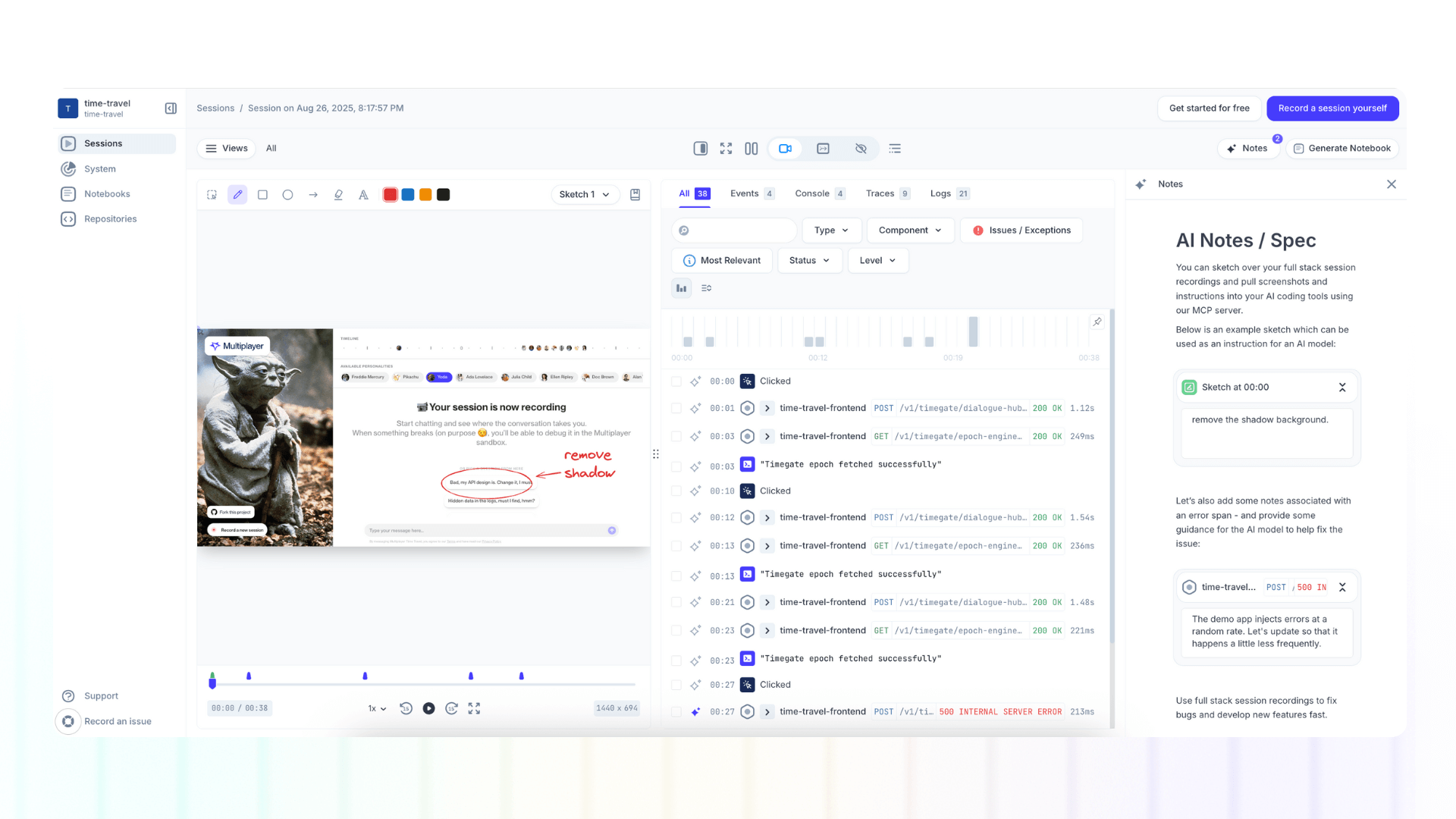
👀 If this is the first time you’ve heard about Multiplayer, you may want to see full stack session recordings in action. You can do that in our free sandbox: sandbox.multiplayer.app
If you’re ready to trial Multiplayer you can start a free plan at any time 👇