The essential guide to building a minimum viable architecture
Minimum Viable Architecture plays a critical role in the success of your Minimum Viable Product. Learn how to avoid the most common pitfalls in implementing this strategic approach.


The concept of Minimum Viable Product (MVP) surged in popularity in the early 2010s following the publication of Eric Ries' book The Lean Startup. Since then, it has undergone various iterations, giving rise to alternatives like Simple, Lovable and Complete (SLC) and Earliest Testable/Usable/Lovable.
The core principle remains straightforward: quickly and inexpensively build the product’s core features, in order to gauge the market before investing significant time and resources into something that may not turn out to be successful. In short, you have a hypothesis on how to solve a problem users are experiencing, and you want to build just “enough” product to validate that it delivers value in sufficient quantity and for a sufficient number of people for it to be economically viable.
This lean approach is particularly appealing to startups aiming to quickly validate key assumptions that would prove or disprove the product’s value, enabling timely iterations or pivots based on user feedback. However, the usefulness of this concept extends beyond early-stage ventures looking to achieve Product Market Fit (PMF). Any organization developing new features or products can use an MVP to test hypotheses about a product's incremental value, without committing excessive time, money, and effort to potentially wrong requirements.
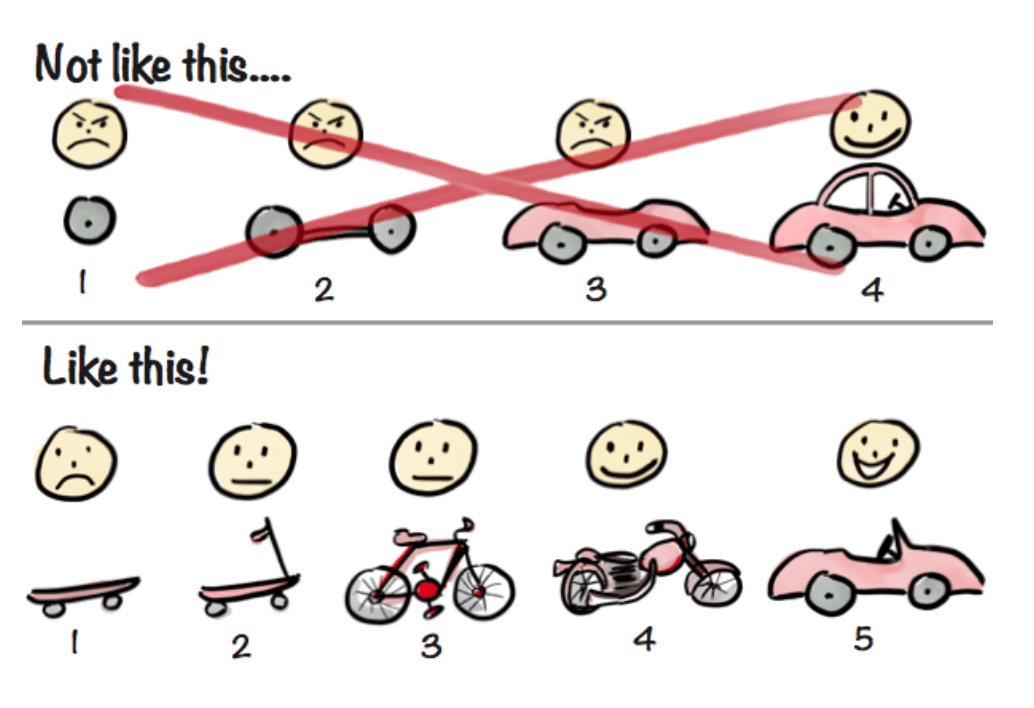
To make a product “viable” it’s not only sufficient to provide value to users, it’s necessary to ensure its technical and economic feasibility over time. Enter the concept of minimum viable architecture (MVA), which dictates the initial design decisions to ensure the product's architecture is robust, adaptable, and sustainable.
In other words, the architecture of the application allows it to meet its current requirements, without jeopardizing its ability to meet future requirements (i.e. minimizing architectural technical debt and achieving long-term viability).
Ultimately this also prevents potential user disillusionment due to performance issues and safeguards the product against competitors. In fact, if an MVP is successful but the MVA isn’t viable, teams risk losing user trust and interest due an unsustainable product with poor performance.
In simple terms, creating a minimum viable architecture involves building “just enough architecture” to evaluate the technical viability of a product, while keeping the design flexible enough to tackle the future requirements.
This article aims to provide some best practices on how developers can balance the need to bring the product to market fast, with the need to build a sustainable solution with an underlying architecture that can sustain future requirements.
Common mistakes in implementing MVAs
Numerous common pitfalls can undermine the success of an MVA. This section delves into some of the most frequent errors teams make when building their software.
(1) Letting the architecture “emerge” without an MVA
Before the advent of agile practices, the prevailing approach was waterfall development coupled with Big Design Up Front (BDUF). However, in an effort to get away from documentation-driven and heavyweight software development processes, many of the agile guidelines were misinterpreted leading to the belief that upfront design and architectural documentation are unnecessary.
Today, many agile practitioners subscribe to the notion that focusing on understanding customer needs and delivering value through small, quick iterations allows the architecture to “emerge” organically.
While there is no absolute right or wrong way to build a software architecture, some upfront architecture design would help your team have a shared understanding of your software system vision and align on the collection of constraints that you are agreeing to adopt.
(2) Tactical ‘prototype’ MVAs
A prototype is a "throw-away" version of a product meant only to evaluate a concept. In contrast, an MVP should include core features that users can reasonably expect to be able to continue using in the future. Because of this implicit promise, supporting each MVP with a minimum viable architecture ensures that the product can be sustainably supported.
However, for the sake of implementing an MVP as rapidly as possible, teams might choose to build a sacrificial architecture: they intentionally opt for tactical design decisions, knowingly expecting to rework or fully replace the MVA should the MVP be successful. While companies like eBay have succeeded with this approach, for many others, it has been disastrous.
As many developers know, nothing is as permanent as a temporary fix in software. While the team might start with the intention of building low-quality software with the plan to refactor it later, the more realistic scenario is that they will continue to build on top of it, accumulating architectural technical debt.
(3) Design for debuggability from the start
A system that's difficult to debug accumulates technical debt faster because engineers spend more time hunting for root causes than implementing solutions. Worse, poor debuggability compounds over time: as the system grows more complex, understanding failures becomes exponentially harder without proper observability built into the architecture from the start.
When designing your MVA, consider how you'll answer critical questions when things go wrong: Can you reproduce issues that only occur in production? Can you trace a user's journey from frontend interaction through backend services? Can you correlate errors across your distributed system without manually piecing together logs from multiple tools?
Modern approaches to debuggability recognize that distributed systems require full-stack visibility. Rather than treating frontend behavior, backend traces, and logs as separate concerns managed by different tools, treating them as correlated, session-based data provides the holistic context needed to understand complex issues.
Building debuggability into your MVA from day one pays dividends throughout your product's lifecycle. It accelerates your ability to iterate by reducing the time spent investigating issues. It preserves institutional knowledge by creating artifacts that document not just what broke, but the full context of how and why. And it ensures that as your system scales and your team grows, debugging doesn't become an archeological expedition through fragmented data sources.
(4) Non-documented MVAs
Comprehensive architecture documentation is crucial for project success. Not only does architecture documentation ensure that a system is well-understood, thoughtfully designed, and can be clearly communicated to others, but it also results in higher team productivity.
It’s important to note that effective architecture documentation goes beyond diagrams and includes detailed descriptions of decisions, constraints, trade-offs.
At any point in the project, the team should be able to understand:
- Any original constraints or assumptions that dictated specific choices. For example, knowing what maximum number of concurrent users was assumed at the beginning of the build, can significantly impact how teams scale systems in response to growth.
- The conscious trade-offs and their rationale. Knowing what technology choices and structural strategies you rejected is often even more useful than knowing what you selected; it shows your thought process and provides insights into constraints you may have been under when you made the decision.
- What technical debt you’ve knowingly incurring. Architectural technical debt encompasses all the intentional and unintentional decisions made during the system design process (e.g. architectural style, tech stack, development methodologies, etc.), that result in issues such as reduced maintainability, increased complexity, decreased performance, and scalability challenges.
Both complete lack of documentation and partially documented architectures can hinder productivity and the long-term viability of a project.
(5) Over-architected MVAs
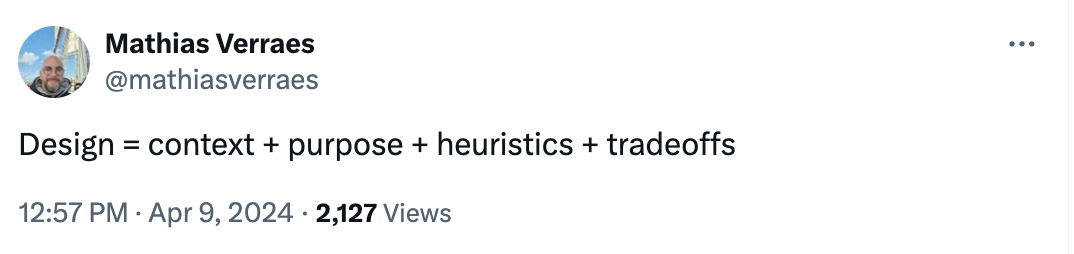
Teams often over-engineer systems to solve hypothetical future problems that may never materialize, while overlooking immediate challenges that could jeopardize the project. This typically occurs when software architects and engineers design systems based on worst-case scenarios informed by optimistic and speculative estimates from business stakeholders.
For instance, consider when a business predicts a high number of concurrent users; engineers might add a safety margin to these estimates for extra security. This can lead to a system designed to handle far more users than it will realistically encounter, incorporating unnecessary complexities like advanced caching mechanisms.
Moreover, teams may base technical decisions on ambiguous requirements such “the system must be fast” or “the system must be scalable”, leading to varied interpretations and implementations. Such decisions often result in overly complex systems that are difficult to maintain and adapt to actual user needs.
Risks of neglecting MVAs
Neglecting the minimum viable architecture (MVA) in the development of a Minimum Viable Product (MVP) can lead to significant risks that become apparent only when the system needs to scale beyond its initial user base.
Failing to consider the essential technical requirements for supporting an MVP can result in several critical issues:
- Loss of user satisfaction: As a user base grows, inadequate architecture may fail to meet performance expectations, leading to frustration and decreased user engagement.
- Accumulation of technical debt: Quick fixes and workarounds become permanent, compounding complexity and costs for maintenance and debugging of your system.
- Costly refactoring: Updating an ill-conceived architecture to meet necessary performance, security, or scalability standards can be prohibitively expensive.
- Loss of competitive advantage: A non-scalable or rigid architecture can slow down the ability to innovate or respond to market changes. Competitors could also capitalize on these weaknesses by stealing the idea, nailing the execution, and offering a more performant solution to users.
The MVA approach advocates for building the software system in manageable iterations, focusing strictly on the known and essential requirements at each stage. This strategy avoids burdening the design with unnecessary features based on unvalidated assumptions, fostering a sustainable, continuous delivery of business capabilities.
Balancing act: system design vs. speed
“There is no perfect architecture for all scale, for all phases of evolution, for all problem domains”
- Randy Shoup, VP Engineering
Developers need to balance the need to bring the product to market fast (and, hence, the temptation of implementing a "throw-away" prototype architecture) with the need to build a scalable solution that addresses future requirements, while side-stepping the pitfall of over-architecting.
An intentional approach to software architecture, using modern practices such as Continuous Architecture and Evolutionary Architecture, can help to extend the life of the product while still reaping the benefits of an agile approach. Especially when following the advice to “Delay design decisions until they are absolutely necessary”.
In particular, making upfront decisions on how the product will handle product/system characteristics (e.g. concurrency, throughput, latency and responsiveness, scalability, persistency, security, monitoring, and user interface) profoundly influence the product’s long term viability and sustainability.
As the MVP progresses, it's vital to continuously review and refine these architectural decisions to ensure the MVA remains aligned with evolving product needs. This iterative process helps the team correct suboptimal decisions and keep pace with technological and market changes.
Furthermore, to ensure you’re building “enough” MVA without over-architecting, consider the following strategies:
- Contextualize your estimates in time (e.g. How many concurrent users would be on the system at the initial launch / within the first 6 months / within the first year) so that you focus on realistic data and can evolve the architecture based on actual usage.
- Opt for simple technology that is well-understood by your team, which can hasten the learning curve, facilitate product enhancement, and boost team productivity.
Final thoughts
The most successful MVAs strike a balance: they're lean enough to support rapid validation, robust enough to scale with success, well-documented enough to evolve with your team, and observable enough to debug effectively.
By considering these dimensions from the outset and continuously refining them as your product evolves, you create a foundation that can support sustainable growth rather than collapse under technical debt.
Remember: an MVP without a viable architecture is just a prototype. And an architecture without debuggability is a time bomb waiting to detonate as your system grows in complexity and your team grows in size.
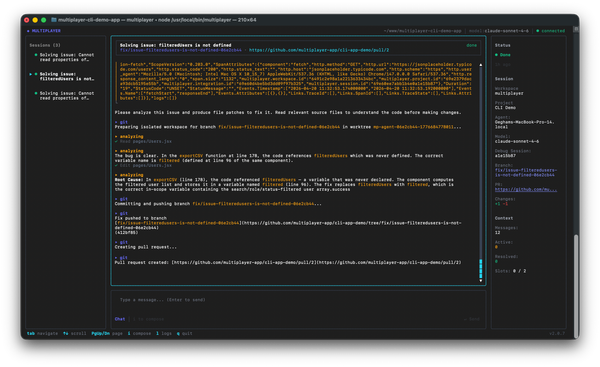
One copy/paste in your terminal and the debugging agent is running:
npm install -g @multiplayer-app/cli && multiplayer
Rather explore first?👇